
Both sides have now revealed a preference for escalation over strategic defeat, and each new provocation narrows the space for the next pause. The Touska seizure, Iran's refusal to negotiate under blockade, Israel's strikes on Iranian oil infrastructure -- all of these add up to an increasingly untenable situation. This makes the wild card -- Trump and his motormouth -- more consequential than ever, notes Prem Panicker in his must read blog on the Iran War.

Days after Russia alleged that Ukraine targeted President Vladimir Putin's official residence in a drone attack, Russian authorities on Thursday said they had shared what they described as evidence related to the incident with the United States, Anadolu Agency reported.

Trump may strike. He may announce productive talks and extend again. He may do both at the same time. Iran will not open the Strait on someone else's terms, so no matter what happens, that problem will remain unsolved. And the IRGC will still be collecting its $2 million toll from every ship bold enough to ask permission to pass.

Egypt, Pakistan, Saudi Arabia and Turkey met in Islamabad in what analysts say is the formal opening of a new diplomatic formation that could reshape the post-war regional order. Their immediate goal is a ceasefire; their larger ambition is to ensure that neither Iran nor Israel emerges from this war in a dominant position. Pakistan's foreign minister then flew directly to Beijing and mooted a Chinese role as guarantor of any eventual agreement. Prem Panicker continues his must read daily blog on the Gulf War.

Amidst escalating tensions in West Asia, India voices strong concerns over the safety of its nationals and the potential disruption to energy supplies, urging dialogue and diplomacy for a swift resolution.
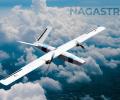
The foremost lesson for India today is to beef up its air defence to cater for multiple drone attacks. As seen in Operation Sindoor, we have come a long way, but there's room for getting better. We must develop a robust and almost impregnable air cover over ourselves, asserts IAF veteran Air Commodore Nitin Sathe (retd).

'In such a scenario, Iran could proclaim itself victor, rebuild, re-enforce its diminished regional proxies to further destabilise neighbouring nations and take control of the Persian Gulf and Strait of Hormuz.'

Travel disruptions following airspace closures in the Gulf have forced Daniil Medvedev and Andrey Rublev to miss an Indian Wells exhibition, while an ATP Challenger in Fujairah was cancelled amid security concerns.

The LPG squeeze on India's restaurant sector is the quotidian face of a deeper crisis.

Iran is fighting a different war: Older, slower, and in some ways more dangerous. Iran doesn't need to shoot down an F/A-18. It only needs to make the Strait of Hormuz feel dangerous long enough for insurance markets, shipping companies, and oil futures traders to do the rest. Prem Panicker continues his must-read daily blog on the war in the Middle East.
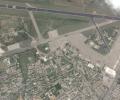
The Pakistani government has once again found itself embarrassed on the world stage, now acknowledging the impact of India's strategic and precision strikes on its military installation during the escalation in May, following Operation Sindoor, which came in retaliation for the April 22 Pahalgam terror attack that killed 26 civilians.

'The next two to three weeks will not be decided in Washington.' 'They will be decided in Tehran, in whatever calculation Iran makes about the costs of continued resistance against the costs of appearing to have yielded.'
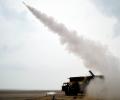
The Indian Army in the intervening night of May 8 and May 9 successfully repelled and responded to multiple drone attacks by Pakistan along the western border and the Line of Control (LoC) in Jammu and Kashmir.

Taking Kharg would give the US control over virtually all of Iran's oil exports and thus provide significant leverage, notes Prem Panicker in his must read daily blog on the Gulf War. It would also put American troops within range of Iran's remaining missiles, drones, and artillery on a piece of real estate that is just eight square miles in size, and just 15 miles from the Iranian mainland.
The policy unveiled by the home ministry is based on seven key pillars to counter the terror threats emanating from India or abroad -- prevention, responses, aggregating internal capacities, human rights and "Rule of Law"-based processes.
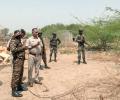
The western Rajasthan experienced a complete blackout and sirens were sounded multiple times, particularly in Barmer, to alert residents.

The pause gives the US time to breathe, to regroup, to move its expeditionary force into position without risk of interception along the way. It gives Iran nothing -- on the ground, attacks against its infrastructure continue apace. Prem Panicker in his must read daily blog on the Gulf War.

A series of blasts took place in Srinagar city as the security agencies brought down a drone that was seen hovering over Batwara area of the city, close to an army installation, officials said.
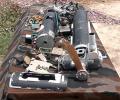
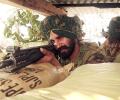
The Indian Army used Medium Machine Guns (MMGs) to target Pakistani Army forward posts along the Line of Control (LoC), inflicting heavy casualties during a ceasefire violation on the intervening night of May 7-8.

Israel and the United States had a plan. Iran punched back. And now the Gulf is reeling, the world is beginning to feel the pain and, as on date, no one in Washington or Tel Aviv appears willing to admit that the punch has landed, notes Prem Panicker, continuing his must-read blog on the war in the Middle East.
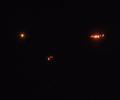
Suspected drones were observed along the International Border in Samba district of Jammu region on Monday, while armed forces downed a 'surveillance drone' in Punjab's Jalandhar district.

China displayed a range of new weapons at a military parade, including laser weapons, nuclear ballistic missiles, giant underwater drones, and fifth-generation aircraft.
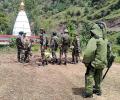
'Unfortunately, India and Pakistan could learn a 'lesson' from this conflict that will make them more likely to use these weapons against each other in the future.' 'Rounds of missile and drone attacks could be more routine features of their hostility, just like artillery fire has become a familiar fact of life along the Line of Control.'

After recent high-intensity operations in the Bastar region and the neutralisation of several senior Maoist leaders, officials say the insurgency has lost its ability to mount large-scale coordinated attacks.
The Indian Army demonstrated how India's air defence systems saved the Golden Temple in Amritsar and other cities in Punjab from Pakistani missile and drone attacks on May 8 and 9, 2025.

Union Home Minister Amit Shah has announced that India will soon create a comprehensive anti-drone unit to secure its borders. He highlighted the increasing threat posed by drones, especially along the India-Pakistan border, and emphasized a 'whole of government' approach to tackle this issue. Shah also spoke about the ongoing Comprehensive Integrated Border Management System (CIBMS) and the Modi government's Vibrant Village Programme, which aims to develop and integrate the population of northern borders.
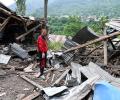
Drones were sighted and explosions were heard in Jammu and Kashmir on Friday, a day after India thwarted attempts by the Pakistan military to attack Indian military installations using drones and missiles. The drones were also engaged in Udhampur and Nagrota of Jammu and Punjab. Heavy cross-border shelling started along the International Border in Suchetgarh and Ramgarh sectors of Jammu and Samba districts. Chief Minister Omar Abdullah appealed to residents to stay indoors and ignore rumors.
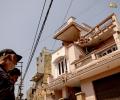
The casualties were reported hours before India and Pakistan agreed to end hostilities, which soared after the Indian Armed Forces hit terror launchpads in Pakistan and Pakistan-occupied Kashmir earlier this week in response to the Pahalgam attack.
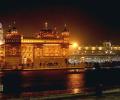
The Army on Monday showcased a demonstration of how Indian Air Defence systems, including AKASH missile system, L-70 Air Defence Guns, saved the Golden Temple in Amritsar and cities of Punjab from Pakistani missile and drone attacks.
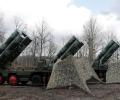
India successfully intercepted or neutralized all Pakistani missiles and drones that targeted 15 Indian cities on Wednesday night, according to official sources. The attack, which was launched in response to India's Operation Sindoor, involved the deployment of Barak-8 missiles, S-400 Triumph air defense systems, Akash surface-to-air missiles, and indigenously developed anti-drone equipment. India retaliated with precision strikes on Pakistani territory, destroying an HQ-9 air defense unit in Lahore and damaging key radar infrastructure. The incident highlights the strength of India's air defense capabilities and its ability to project power with surgical precision.

According to the DRDO chairman, the BrahMos missile, primarily launched from Sukhoi Mk 1, was used during the offensive phase.

'The (Maoist) organisation is in visible decline. Their senior leaders are ageing. Forest life is unforgiving -- older leaders simply cannot cope physically.' 'Earlier, they attracted educated youth from cities. That stream has dried up. Today's recruits largely come from poor village backgrounds and lack ideological depth.'

Pakistani drones were intercepted by Indian air defence in Jaisalmer. Explosions were heard and flashes seen in the sky.

Iran has fired 280 ballistic missiles at Israel since early Friday in retaliation to Israeli strikes on its nuclear programme, its military and political officials, and nuclear scientists.

A large fire was reported on Saturday night at a strategic complex near Haifa in northern Israel after Iran launched a barrage of missiles and drones, MEHR News Agency reported, citing local media.

A villager was killed and three others were injured in shelling by Pakistan in forward areas of Jammu and Kashmir's Poonch and Rajouri districts early Friday morning, prompting Army troops to retaliate. The shelling also caused significant damage to property, with many houses and hundreds of vehicles affected. The firing and shelling were directed at areas in Rajouri, Poonch, and Jammu districts, apart from Kashmir's Kupwara and Baramulla districts, overnight.

The BSF recovered the black-coloured drone, a quadcopter of 'DJ Matrice 300 RTK' make, with an attached payload of 2.1 kilogram suspected heroin attached through an iron ring, the spokesperson said.

The Indian Navy's 'mission deployed' guided missile destroyer INS Visakhapatnam responded to the attack within an hour of receiving a distress call from the vessel Genco Picardy, they said.

Iran's Islamic Revolution Guard Corps (IRGC) said the attack was aimed at "specific targets".

Official confirmation from the government is still awaited, and more details are expected soon.
